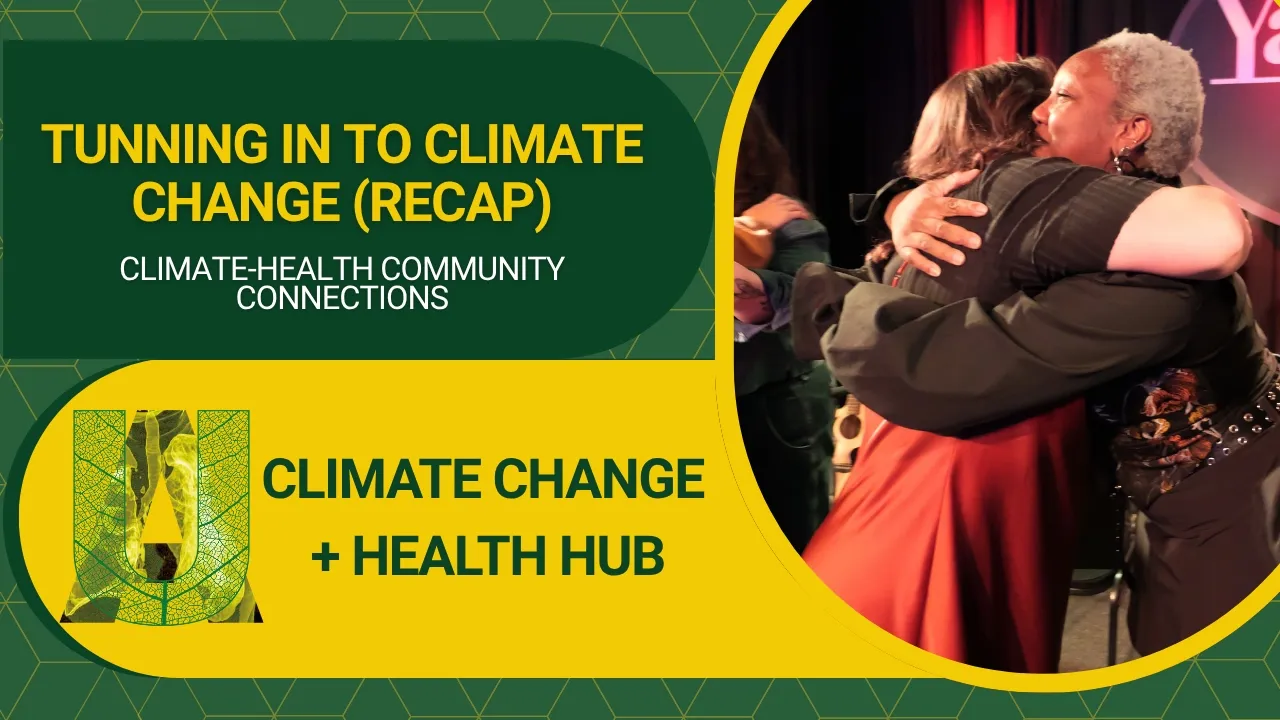
We have entered an era of the climate crisis defined by the crossing of critical global warming thresholds, the rise of fascism and the far-right, and increasingly regular climate disasters around the globe. These rapidly intensifying changes to our planet are having dramatic consequences on human well-being and people are feeling the climate crisis. While reasonable, rational, and proportionate to the scale and scope of the climate crisis, intense emotional responses to climate change and its impacts are negatively impacting mental health, well-being, and people’s ability to thrive (Cissé et al., 2022).
The people behind the project.
Meet the amazing artists, musicians, and researchers behind the project!
PhD Candidate, Creative Director, Musician
Hannah Bayne
Hannah Bayne (She/They) is a PhD Candidate and SSHRC Canada Graduate Scholar in ᐊᒥᐢᑲᐧᒋᐋᐧᐢᑲᐦᐃᑲᐣ (amiskwaciwâskahikan) and Métis North Saskatchewan River territory at the University of Alberta. Her research explores the impacts of climate change on psychosocial well-being, using community and arts-based research methodologies to examine how collective music-making can address climate grief and anxiety.
Musician
Amanda Penner
Amanda Penner (They/She) is a queer folk singer/songwriter living on Treaty 6 Territory otherwise known as Edmonton, Alberta. With songs that are cinematic in nature and evocative lyricism similar to vignette style prose, Penner’s music lends itself to the yearners of the world trying to find a soft place to land.
Recording Artist; Producer
Dylan Fox Campbell
Dylan F. Campbell (He/Him) is a musician, composer, and producer currently residing in Edmonton. Holding a BMus in composition from MacEwan University, Dylan bases his practice around sonic exploration, experimentation, and creative play. As the guitarist of activist band First Gen, Dylan works to help champion the voices of first-generation immigrants and create more diverse spaces within the Edmonton music community.
Visual Artist
Theo Donovan
Theo Donovan (he/they) is a queer mixed ancestry Red River Métis/Michif artist who gratefully resides in ᐊᒥᐢᑿᒌᐚᐢᑲᐦᐃᑲᐣ (Amiskwacîwâskahikan), Treaty 6 Territory, St. Albert Métis District. Theo is an interdisciplinary visual artist, writer, teacher and activist who has just completed his Bachelor of Studio Arts with Distinction at MacEwan University. At the core of his practice are notions of curiosity and play, tender care and slowness, queer joy and resistance.
Musician
Emmet Michael
Introspective and enthralling, with equal parts grit and grace, Emmet Michael (He/Him) is a musician who was built on his trials. Turning to music in his darkest times, he found solace in his ability to share his heart with others through his lyrics. Drawing on his experience of transitioning from female to male, living with mental illness, and battling addiction, his songs express an intimate story.
Musician
Benjamin Longman
Benjamin Longman (They/Them) is a singer, songwriter, and musician, born and raised in London. They make thoughtful and melancholy Art-Folk. Since adopting Calgary as home in 2015, Benjamin has cemented their reputation as a key part of the Alberta music community. Establishing a distinctive brand of lo-fi art folk they have expanded their music to incorporate elements of art pop, ambient, jazz, indie rock, DIY, and even touches of their childhood classical training.
Musician
Asiah Holm
Asiah Holm (She/Her) is a Cree First Nations artist based in Vancouver, BC. Her multidisciplinary practice spans music, acting, writing, and production. She was drawn to creative expression from an early age, immersing herself in choir, piano, and drama throughout her childhood.
Musician
Lajla Jean
Lajla (Ly-la) Jean (They/Them), the singer/songwriter and voice behind Silent St. j, perfectly weaves together Ethereal Folk, hauntingly soothing vocals, and captivating lyricism to enchant listeners, creating an emotional resonance with their music. They have the ability to inspire healing with their honest and introspective lyrics, inviting the audience to explore the depths of their emotions.
Academic Supervisor
Dr. Sherilee Harper
Sherilee L. Harper is a Canada Research Chair in Climate Change and Health and Professor in the School of Public Health at the University of Alberta and Vice-Chair of IPCC Working Group I. Her research investigates associations between weather, environment, and public health in the context of climate change, and she collaborates with partners across sectors to prioritise climate-related health actions, planning, interventions, and research.
Academic Supervisor
Dr. Ashlee Cunsolo
Ashlee Cunsolo is an internationally recognized scholar and leader and Provost and Vice-President Academic of Acadia University. As a researcher, Dr. Cunsolo has been working for almost 20 years on community-based and community-led climate change and health research in the North and internationally. Ashlee is internationally recognized for her groundbreaking work on climate change, mental health, and ecological grief, particularly in Labrador and across the North.
Climate emotions
Anxiety, grief, anger, shame, hopelessness and guilt are reasonable and rational response to the climate crisis. Supporting wellbeing means more than asking people to cope alone: adaptation should also strengthen connection, make room for shared grief and prioritizing equitable approaches (Cunsolo et al., 2020; Olsen et al., 2026).
The Climate Emotion Wheel is based on work by Panu Pihkala and can help us to identify and name what we are feeling in relaton to the climate crisis.
Why music?
Together, emotional support and shared musical experiences may help nurture wellbeing, community connection and the capacity to respond to climate change. Music is one part of a wider approach of adpatation strategies for supporting mental health and wellbeing
01 / 06
More than making music
“Musicking” means taking part in music: listening, composing or performing. The term recognises music as a social activity and values every participant, not only the person on stage (Small, 1999).
02 / 06
Support for anxiety
Research outside climate-specific settings shows that music therapy can reduce anxiety symptoms and support the processing of difficult emotions. This evidence offers a foundation for exploring music as support for climate emotions (Gutiérrez & Camarena, 2015; de Witte et al., 2025).
03 / 06
A way to process grief
Music can help people regulate emotions and work through grief in therapeutic and community settings. (Iliya, 2015; Wu & Lu, 2021).
04 / 06
Connection and care
Music nurtures empathy, compassion and connection with others. These social qualities support wellbeing and help people respond to climate change with care isolation (Gupta & Singh, 2020; Wu & Lu, 2021).
05 / 06
Believing we can contribute
Music can support self-efficacy—the belief that we can succeed at something we set out to do. Together with empathy and emotional support, this may help people feel more able to contribute to a collective response (Gupta & Singh, 2020; Wu & Lu, 2021).
06 / 06
From emotions to action
Climate action depends on a mix of knowledge, values, feelings and social conditions. Music strengthens some of the emotional and relational conditions that support community action (Kollmuss & Agyeman, 2002).
Making room for shared grief
Grief feels less isolating when it is shared and witnessed. Communal rituals offer space for honest emotion, mutual support and relief. Making and experiencing music together can become one of these rituals, helping communities hold their climate grief and support one another (Weller, 2015; Olsen et al., 2026; Small, 1999).
Music that everyone can take part in
Music can happen in parks, schools, libraries, community centres and faith-based spaces—not only concert halls. Accessible venues, sensory-aware spaces and sign-language interpretation of lyrics can help more people participate. Listening, singing and dancing offer ways to engage without owning an instrument. Free music and online creation tools can bring music into existing resources for coping with climate emotions. Equity and access should shape how these opportunities are offered.